Starting a clothing brand is exciting, but the production side can feel like a maze. MOQs, tech packs, GSM, samples, duty… it’s a lot to take in. As a manufacturer working with UK brands, we see the same questions (and the same costly mistakes) again and again. This guide walks you through the steps that matter most, in the order you’ll meet them.

1. Know who you’re designing for
Before you think about fabric or factories, be clear on your customer and your brand’s point of view. Who are they, what do they already wear, and what price would they happily pay? Your answers shape every production decision that follows, from fabric weight to how many pieces you order.
Write down three or four brands your customer already buys from. They’re your best reference for quality, fit and pricing, and they make it much easier to brief a manufacturer.
2. Start with a small, focused first collection
One of the most common mistakes is launching with too much: ten styles in five colours each. It ties up your cash in stock before you know what sells.
A stronger first drop is usually two to four core pieces that work together, for example a heavyweight hoodie, a matching sweatshirt or tee, and joggers, in one or two colours. It looks like a considered collection, keeps costs under control and shows you quickly what your customers love.
3. Understand MOQs (and why they exist)
Almost every manufacturer has a minimum order quantity (MOQ), usually set per style and colour. It isn’t there to make life hard. Custom-coloured fabric has to be dyed in a minimum batch, and setting up cutting, sewing and printing takes the same effort whether you make 50 pieces or 500.
Instead of hunting for the lowest MOQ at any cost, ask manufacturers how they can help you structure a first order: splitting one fabric across styles, mixing sizes within a run, or starting with fewer colours.
4. Choose the right fabric and weight
Fabric is where a lot of a garment’s perceived quality comes from. Weight is measured in GSM (grams per square metre) for knitwear and in ounces for denim. As a rough guide:
- T-shirts: around 140–180 GSM feels everyday and lightweight; 200–260 GSM gives the heavier, structured feel many streetwear brands want.
- Hoodies and sweatshirts: around 280–350 GSM is a solid mid-weight; 400 GSM and above is a true heavyweight.
- Denim: lighter weights suit shirts and summer styles; heavier denim (around 12 oz and up) gives jeans more structure.
Fibre content matters too. 100% cotton feels natural and takes garment dyes and washes beautifully; cotton-polyester blends (often called CVC) hold their shape and colour well and can be more budget-friendly. Ask for fabric samples so you can feel the difference.
5. Create a clear tech pack
A tech pack is the instruction manual for your garment. The clearer it is, the fewer surprises you’ll get. A good one includes:
- Flat sketches of the front, back and any details
- A size chart with measurements for every size
- Fabric, weight, colour (ideally with a Pantone or physical reference) and trims
- Artwork files with print or embroidery sizes and placements
- Label and packaging details
New to tech packs? Read what a tech pack is and what goes in one. Don’t have one yet? A reference garment you love, plus notes on what you’d change, is a perfectly good starting point. A good manufacturer will help you fill the gaps.
6. Never skip sampling
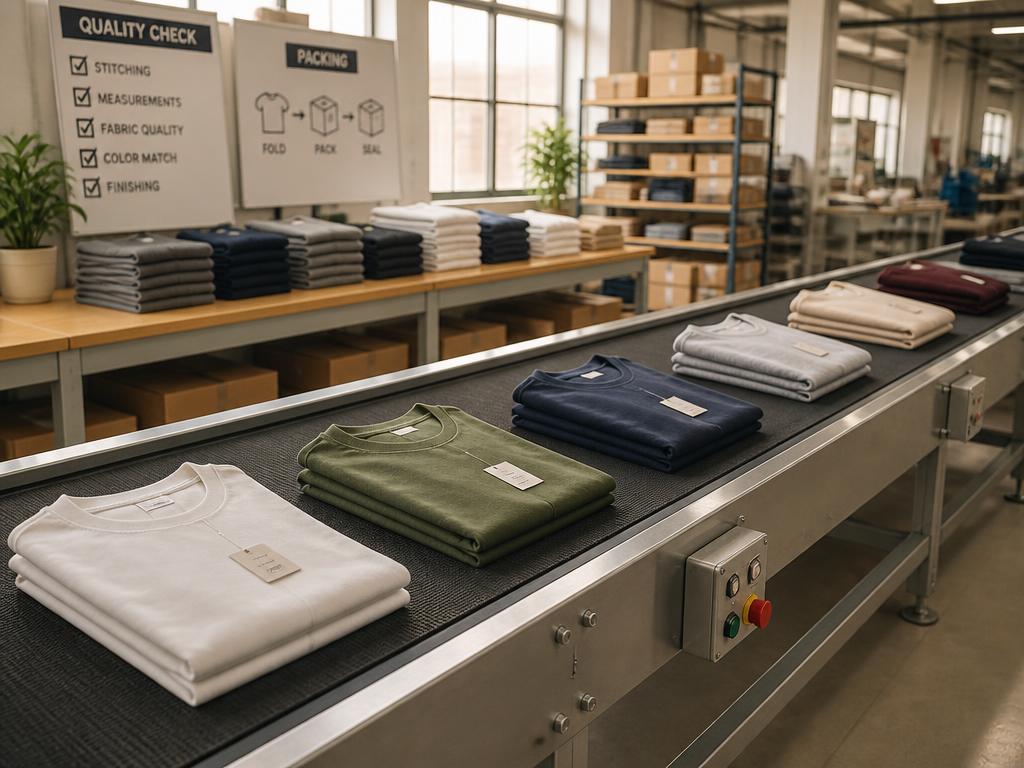
A sample is your chance to check fit, fabric, colour, print and labels before money goes into bulk production. Wear it, wash it and get honest feedback. It’s normal to need a revision or two, and far cheaper to fix things at sample stage than after 200 pieces have been made.
Once you’re happy, your approved sample becomes the standard your bulk order is checked against.
7. Get your labels right
Branded neck labels, swing tags and packaging make a small brand feel established. But some labelling isn’t optional: in the UK, clothing sold to consumers must show its fibre composition (for example “80% cotton, 20% polyester”). Care instructions aren’t strictly required by law, but customers expect them and they help prevent returns. Your manufacturer can produce care and composition labels alongside your branded ones.
8. Budget for the full landed cost
The unit price is only part of the story. To know your real cost per piece, add up:
- Unit price, including decoration and labels
- Sampling costs
- Shipping and freight
- Import duty, which depends on the product and where it’s made
- Import VAT and any customs or courier handling fees
This is why many new brands prefer DDP (Delivered Duty Paid) pricing (DDP vs FOB explained): shipping and duty are built into the price, and the goods arrive at your door without surprise bills. If you’re VAT-registered, speak to your accountant about how import VAT is handled for your business.
9. Plan your timeline backwards
Pick your launch date first, then work backwards. Allow time for sampling and revisions, bulk production, shipping, product photography and building hype on social media before launch day. Most first-time founders underestimate how long sampling and content take, so build in breathing room.
10. Choose a manufacturer who can grow with you
Switching factories after your first few drops means re-sampling, new colour matching and the risk of inconsistent quality. Look for a partner who can handle your first collection and your future ones. Ask them:
- Do you make fabric, dye, sew and finish in-house, or subcontract?
- Can you make the other products I’ll want later, such as denim or washed pieces?
- How do you help new brands with their first order?
- Can I see and feel samples before I commit?
Clear, honest answers to these questions tell you a lot about what working together will be like.
Starting your brand? Let’s talk.
We help new UK brands make hoodies, sweats, tees and denim, with your own prints and labels, delivered duty paid. Tell us about your idea and we’ll suggest the best way to make your first collection.
Send an Enquiry Request a Quote WhatsApp UsRead more: Cost of 200 hoodies · What is a tech pack? · DDP vs FOB · Finding a manufacturer · Sampling